A Short Winter Walk Before Dusk
A short winter walk before dusk can feel easier to fit in: choose a familiar route, prepare for changing light and keep the way home simple.
A short winter walk before dusk is easier to enjoy when you already know how you’ll get home. Choose a familiar street or park path, check the light and weather, and give yourself permission to turn back early.
Which familiar route feels comfortable today?
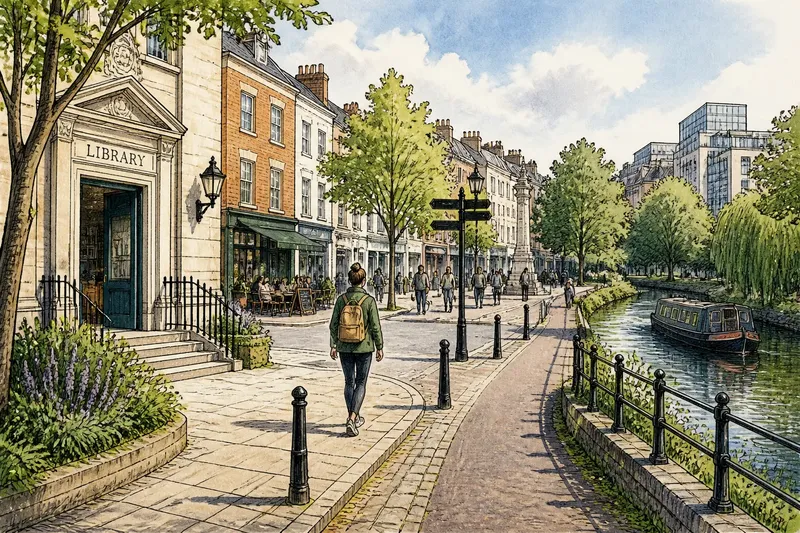
Start with a nearby circuit or an out-and-back along streets you use in daylight. A corner shop, library or recognisable row of trees can serve as a landmark if the evening light changes how the area looks.
Consider the surface and surroundings, not just the map. A lit pavement with dropped kerbs may suit you better than a muddy park path; a broad park path may feel calmer than a busy street. Choose the option that matches the conditions and your energy.
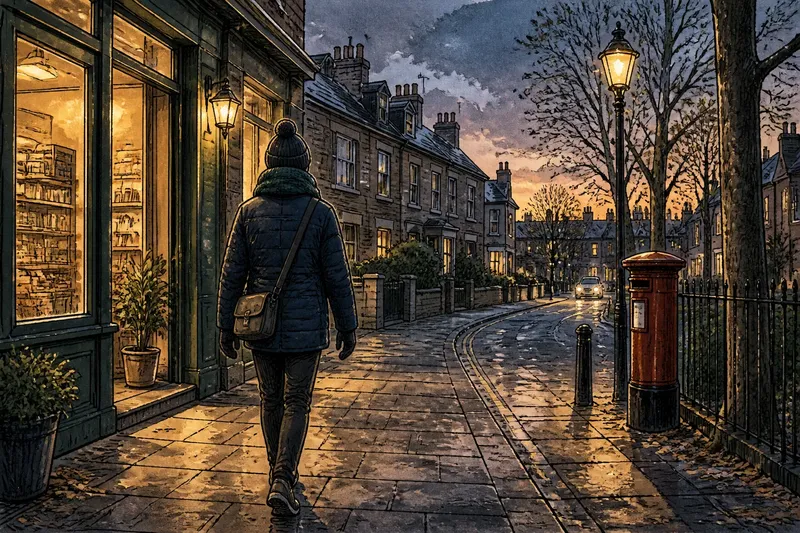
Pick a simple possible turning point, such as a post box or garden entrance. Treat it as a reference, not a target you have to reach.
How short should the walk be?
There is no fixed distance or duration that makes a walk count. Let “short” mean an outing that fits the time, weather and attention you have today, with enough room for an unhurried return.
Say you have a familiar route from your front door to a small square, but the sky is turning grey and you feel tired. Choose the square as a possible turning point, then check how you feel at the well-lit junction before it. If you feel comfortable and have time, continue; if not, take the familiar way home. The observable result is a walk with a clear, reversible choice.
What should you check before setting off?
- Check the pavement for wet leaves or slick patches; if the surface looks slippery, choose a clearer pavement or turn back rather than using a muddy path.
- Check whether your chosen route has a familiar, well-lit way home; if it does, follow it, but if it includes a dark or confusing stretch, choose a simpler route.
- Check how much time you have before your next commitment; if there is room for a relaxed return, take the planned circuit, but if not, choose a nearby out-and-back.
- Check whether your shoes feel secure underfoot; if they do, use the route with the suitable surface, but if they do not, choose a shorter, firmer pavement or postpone the walk.
- Check that your coat, gloves and any hat suit the conditions; if you can move comfortably and handle your keys, set off, but if not, adjust your layers or wait until you are comfortable.
- Check that you can see and be seen on shared streets; if your clothing has a reflective detail or you have a small light, use it where appropriate, but if visibility feels poor, choose a brighter route or head home.
How can earlier dusk shape the walk?
Notice one change in a place you know: shop windows glowing against the pavement, the sky above the roofs, or the sound of traffic shifting as the day winds down. These details can make an ordinary outing feel distinct without asking you to walk farther or faster.
There is no need to chase the last strip of light or wait for a dramatic sunset. If stopping to watch the sky leaves you exposed or inconveniently placed, keep moving towards a familiar, comfortable stretch.
What should you wear and carry?
Dress for the pace you expect to keep. A warm outer layer, comfortable shoes with secure grip and gloves that let you handle your keys are practical choices; a scarf or hat may help if the wind bothers you.
Keep your phone and keys easy to reach without rummaging in the dark. A small light or reflective detail can help others see you on streets shared with cyclists and traffic. Follow any relevant instructions on clothing or equipment, and use what you already have if it is comfortable and suitable for the weather.
How can you keep the plan easy to repeat?
What is not worth the effort is searching for a perfect route or waiting for a flawless evening. A familiar pavement with a clear way home may suit you better than a special destination that needs extra travel or complicated timing.
If a small ritual helps, put your coat by the door, check the sky and choose the nearest comfortable route. Headphones, a route app and a step counter are optional; leave them aside if they add fuss rather than helping you feel prepared.
What should you do if the conditions change?
What if the light fades sooner than expected?
Take the most familiar, well-lit route home and adjust the plan rather than pressing on. If the conditions feel uncomfortable, end the walk and choose another time.
Is a familiar route better than a new one?
A familiar route can make it easier to find your way when daylight is fading. A new route may be enjoyable when you have time and light, but it is not necessary for a short outing.
Should you use a phone or a route app?
Use your phone if it helps you feel prepared, but keep the route simple enough that you do not need to check the screen constantly. You can also tell someone where you plan to walk if that suits your circumstances.
How can you finish without rushing?
Leave a little space between getting home and whatever comes next. Take the direct street back, pause at a familiar corner if it feels comfortable, or simply keep to an easy pace without adding another destination.
A short winter walk before dusk can be modest and still give the day a clear change of scene. Choose a route you recognise, keep the way home straightforward and let the earlier dark guide your choices. For a short winter walk before dusk, the most useful plan is the one you can adjust as you go.